FEMA Hazard Mitigation Grant Program (HMGP): Key Facts
When a major disaster declaration is issued, communities have a chance to do more than rebuild: they can rebuild smarter. This guide explains what HMGP is, who qualifies, and how to align your project submissions with FEMA's standards.
When a major disaster declaration is issued, communities have a chance to do more than rebuild: they can rebuild smarter. The FEMA Hazard Mitigation Grant Program (HMGP) helps state, tribal, territorial, and local governments reduce long-term risk to life and property through targeted mitigation projects. Authorized under Section 404 of the Robert T. Stafford Disaster Relief and Emergency Assistance Act, HMGP provides federal funding to help communities implement long-term hazard mitigation measures after a presidential disaster declaration.
Key Takeaways
- HMGP funding is triggered by a Presidential Disaster Declaration; FEMA allocates up to 15% of total disaster recovery assistance under the Robert T. Stafford Disaster Relief and Emergency Assistance Act
- Eligible projects include flood mitigation, wildfire mitigation, seismic retrofits, wind and tornado resilience, and planning grants to update mitigation plans
- All applicants and subapplicants must have a FEMA-approved hazard mitigation plan and demonstrate cost-effectiveness through a Benefit-Cost Analysis (BCA)
- A non-federal cost share of typically 25% is required; federally recognized tribal governments may be eligible for up to 90% federal cost share
- State Hazard Mitigation Officers (SHMOs) review applications before submission to FEMA for programmatic eligibility and final approval
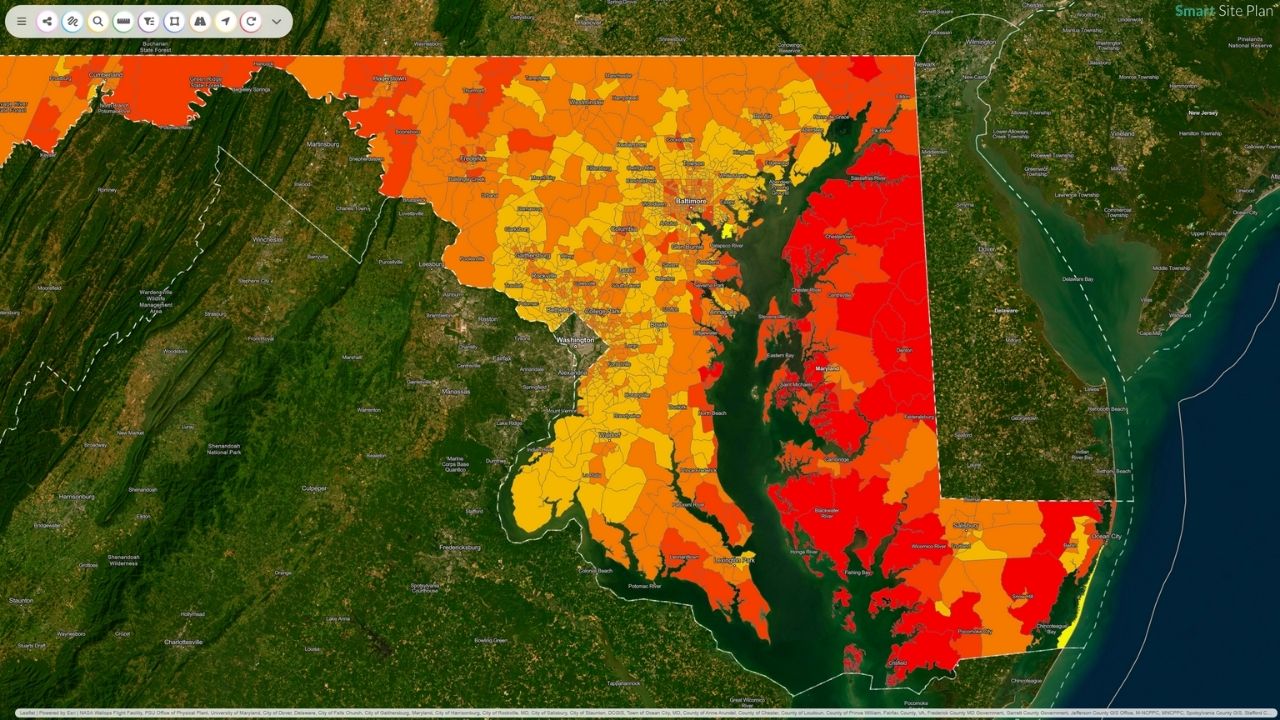
- Smart Site Plan by Juno Maps streamlines the HMGP process by integrating FEMA datasets such as Risk MAP, NFHL, and the National Risk Index into one platform
What Is the FEMA Hazard Mitigation Grant Program (HMGP)
FEMA allocates up to 15% of total disaster recovery assistance under the Stafford Act to HMGP, though the percentage may vary depending on the scale of the federal disaster declaration.
These funds support eligible projects that permanently reduce future losses from natural hazards, such as floods, wildfires, and hurricanes. The program complements other Hazard Mitigation Assistance (HMA) opportunities like Building Resilient Infrastructure and Communities (BRIC) and Flood Mitigation Assistance (FMA).
FEMA also administers HMGP-Post Fire under Section 1204 of the Disaster Recovery Reform Act (DRRA), providing mitigation funding following major fire declarations.
To access HMGP funding, each state, territorial, or federally recognized tribal government must have a FEMA-approved State Hazard Mitigation Plan and oversee a network of subapplicants, including local governments, tribal governments, and state agencies (44 CFR § 201.4).
All local jurisdictions seeking HMGP grant assistance must maintain a current Local Hazard Mitigation Plan, reviewed, revised as needed, and resubmitted to FEMA for approval every five years (44 CFR § 201.6). Each applicant must also maintain a current State Administrative Plan (SAP), outlining procedures for managing HMGP funding and subapplications in coordination with FEMA’s regional office.
Who can apply for the FEMA Hazard Mitigation Grant Program (HMGP)?
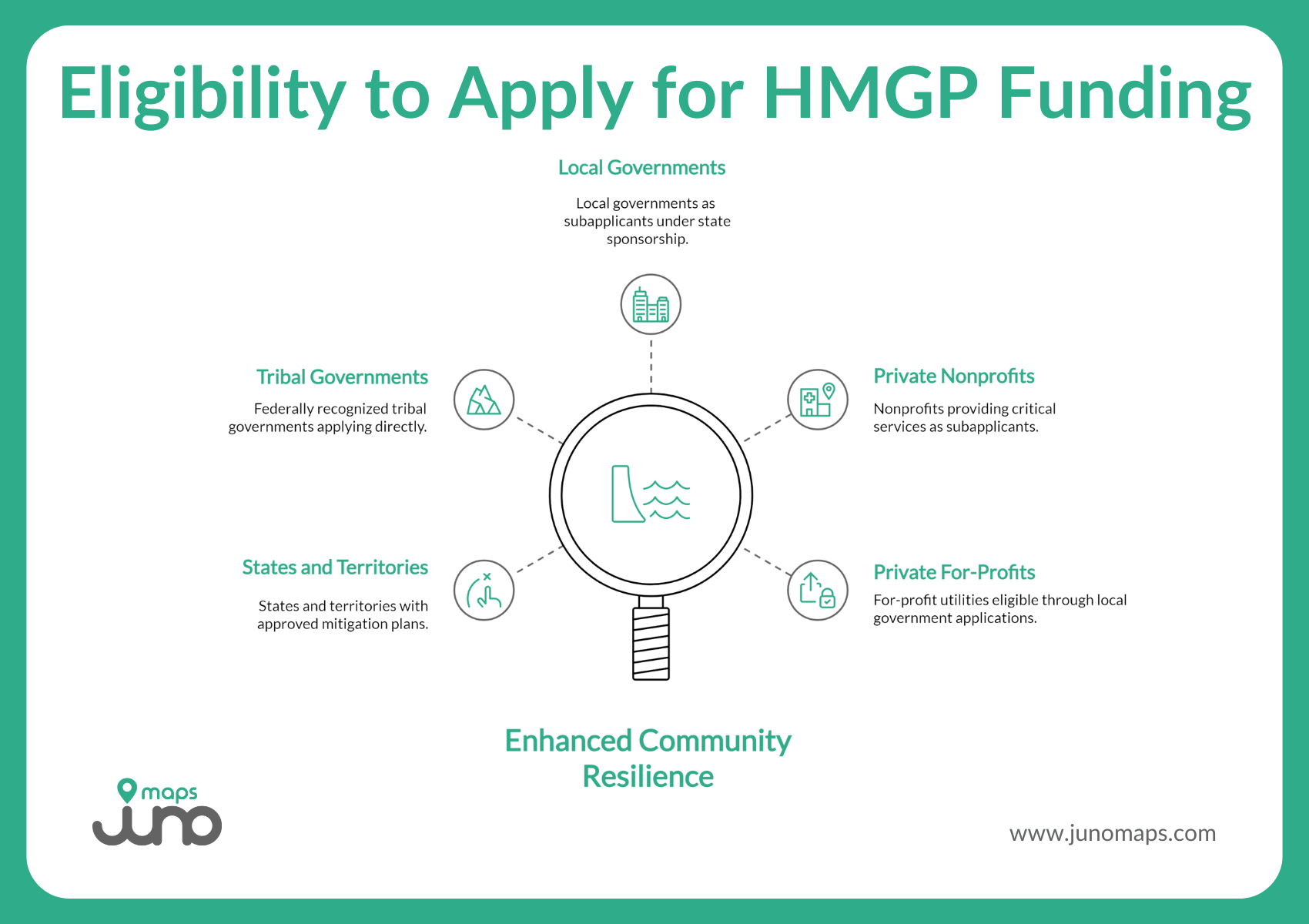
States, territories, and federally recognized Indian tribal governments are eligible to apply directly to FEMA for HMGP funding.
Who Is Eligible to Apply for HMGP Funding?
Eligibility for HMGP is broad by design because building resilience requires coordination across every level of government. The program welcomes participation from states, territories, federally recognized tribal governments, and local jurisdictions, each playing a distinct role in reducing long-term disaster risk.
In some cases, private for-profit (PFP) utilities, such as power, water, or telecommunications companies, may also participate. While they can’t apply directly to FEMA, they may be eligible if a local government submits an application on their behalf. This partnership approach ensures that critical infrastructure operators can access federal funding for projects that protect essential services, strengthen community resilience, and reduce the impacts of future natural hazards.
Primary applicants to the program include:
- States and territories with an approved State Hazard Mitigation Plan
- Federally recognized tribal governments that choose to apply directly to FEMA as grantees
- Territorial governments that oversee mitigation programs across their jurisdictions
Subapplicants may include:
- Local governments (counties, cities, townships, or special districts)
- Tribal governments applying under a state or territory
- Certain private nonprofit organizations that provide critical services, such as utilities, hospitals, or emergency facilities, may be eligible as subapplicants under state or tribal sponsorship
- Private for-profit (PFP) utilities, when a local government submits an application on their behalf
All applicants and subapplicants must:
- Have a FEMA-approved hazard mitigation plan at the time of application
- Demonstrate cost-effectiveness through a Benefit-Cost Analysis (BCA) using FEMA’s BCA Toolkit
- Provide a non-federal cost share, typically 25% (which may include in-kind contributions)
- Federally recognized tribal governments may be eligible for up to a 90% federal cost share based on demonstrated need, as determined by FEMA
- Ensure projects comply with environmental and historic preservation (EHP) requirements
Applications are reviewed by the State Hazard Mitigation Officer (SHMO) or Tribal Hazard Mitigation Office before submission to FEMA for programmatic eligibility and final approval.
How can local governments apply for hazard mitigation assistance?
Local jurisdictions must apply for hazard mitigation assistance through their State Hazard Mitigation Officer (SHMO) or Tribal Hazard Mitigation Office.
What Types of Projects Are Eligible for the Hazard Mitigation Grant Program
Under the Hazard Mitigation Assistance Program, FEMA funds mitigation projects that reduce long-term risk to life and property from future natural disasters. Examples include:
- Flood mitigation: Acquisition or elevation of flood-prone properties, stream restoration, stormwater diversion, and aquifer storage and recovery systems.
- Wildfire mitigation: Defensible space creation, fuel reduction, and green infrastructure for fire resilience.
- Seismic retrofits: Strengthening existing buildings and critical facilities to prevent collapse.
- Wind and tornado resilience: Community safe rooms, shelter retrofits, and wind-resistant design improvements.
- Planning grants: Development or update of state, tribal, or local mitigation plans to maintain eligibility for future funding.
FEMA also supports planning grants to help state and local governments update their all-hazard mitigation plans, ensuring continued eligibility for future HMGP funding. Projects must show that they will reduce risk, align with the state or local hazard mitigation plan, and be technically feasible and cost-effective.
What happens if a community doesn’t have an approved hazard mitigation plan?
Without a FEMA-approved hazard mitigation plan, a jurisdiction is ineligible to apply for or receive funding for hazard mitigation under the Hazard Mitigation Grant Program.
How Geospatial Technology Simplifies the HMGP Process
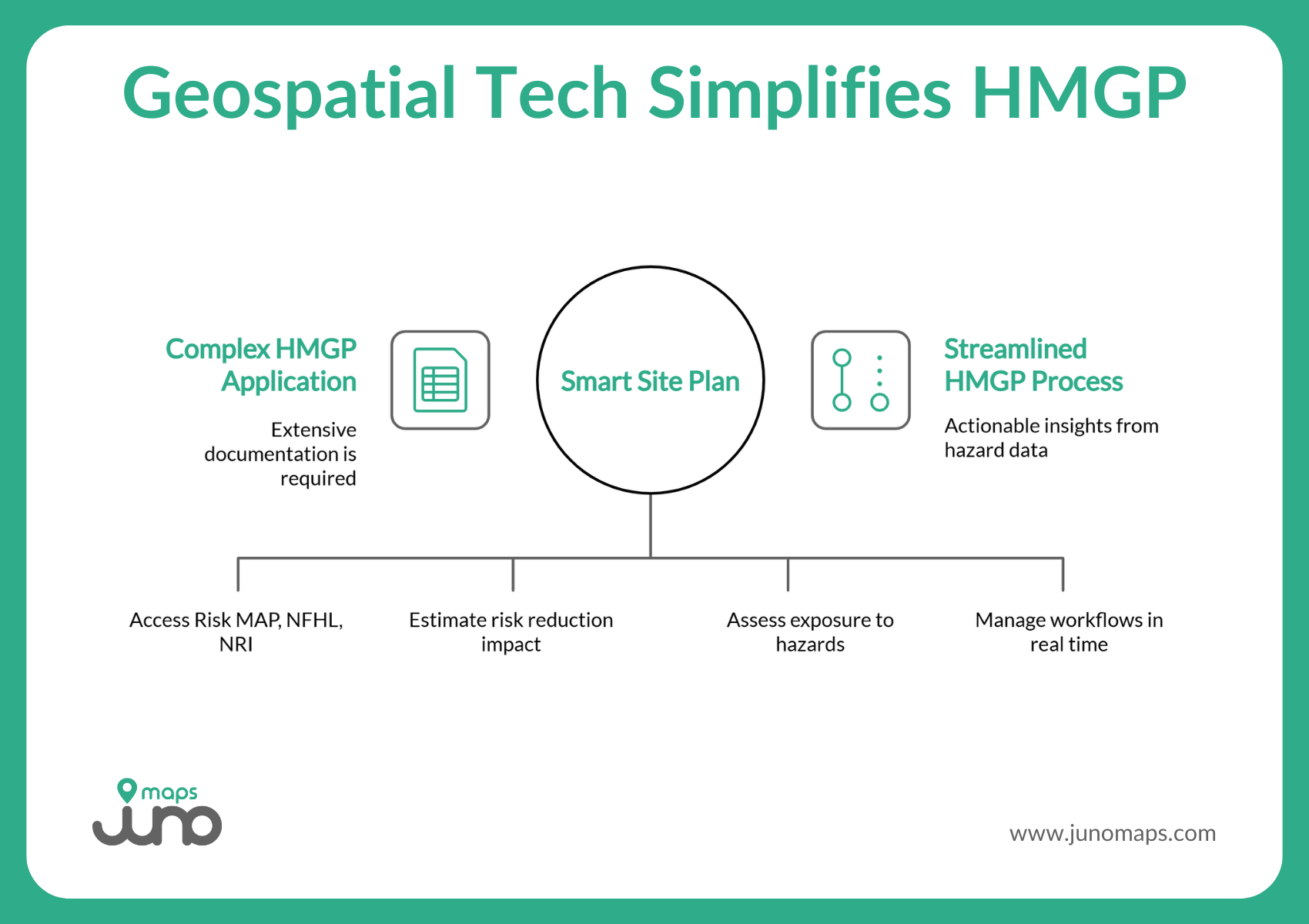
For many local jurisdictions, the challenge isn’t knowing what to mitigate; it’s organizing the data needed to apply for HMGP funding. The pre-application and subapplication phases require extensive documentation: hazard maps, risk assessments, cost estimates, and project justifications.
Smart Site Plan by Juno Maps streamlines this process by turning hazard data into actionable insights. Through a single, cloud-based platform, emergency management agencies can:
- Integrate FEMA datasets such as Risk MAP, National Flood Hazard Layer (NFHL), and the National Risk Index (NRI).
- Visualize proposed projects and estimate their risk reduction impact.
- Overlay infrastructure layers, including utilities, schools, and hospitals, to assess exposure.
- Coordinate across agencies and jurisdictions in real time to manage pre-application and subapplication workflows.
By linking hazard data, infrastructure records, and mitigation strategies, Juno Maps removes the GIS barrier, helping every jurisdiction, from small municipalities to statewide agencies, move efficiently from risk assessment to submission.
Best Practices for a Successful HMGP Application
Success in the HMGP grant process depends on preparation and documentation. Based on FEMA’s HMA Policy and Program Guide (2023) and state best practices:
These steps keep the process transparent, defensible, and aligned with FEMA’s policy requirements, ensuring that mitigation investments withstand scrutiny.
Building a Smarter Path to Federal Funding
The FEMA Hazard Mitigation Grant Program remains one of the most impactful ways for states, territories, tribal nations, and local governments to invest in long-term resilience. Yet, success depends on accurate data, collaboration, and preparedness.
With Juno Maps, every participant, from a federally recognized tribal government to a statewide emergency management agency, can transform complex mitigation planning into clear, actionable insight. The result is stronger applications, faster compliance, and smarter use of federal funds.
Ready to apply for HMGP funding? Discover how Juno Maps helps communities plan smarter, comply with FEMA standards, and secure grant funding that protects lives, property, and the future. Learn more!
Ready to Put This Into Practice?
See how Juno Maps applies to your specific industry and use case.