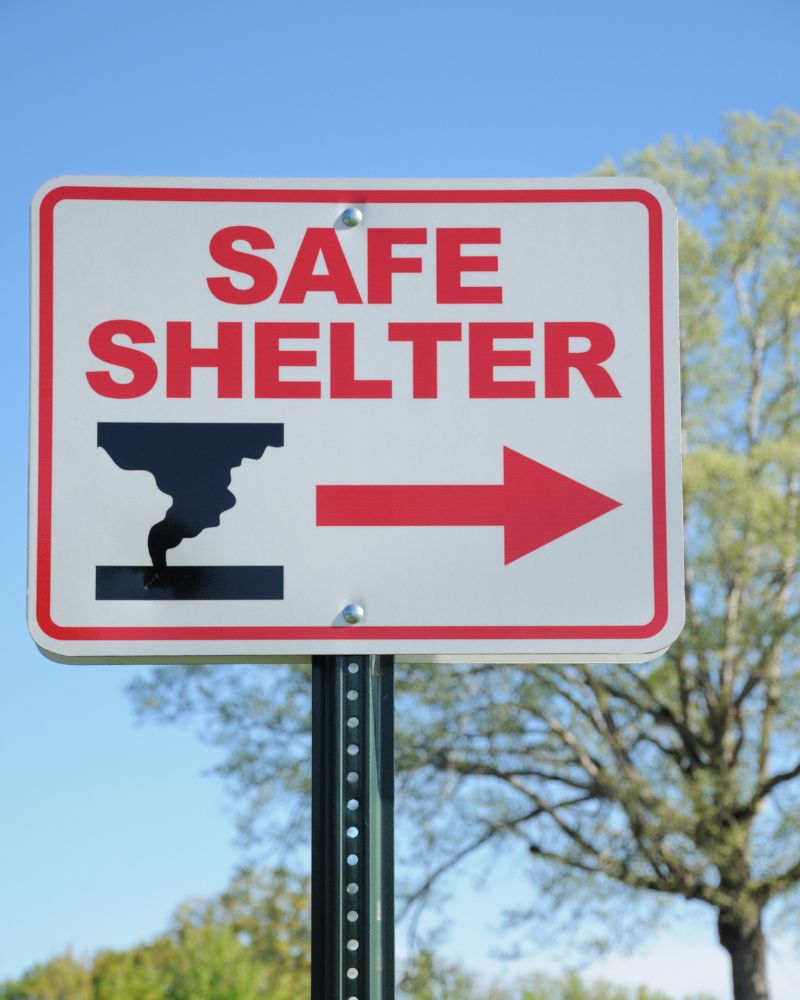
Tornado Preparedness and Severe Weather Disaster Management
Smart Site Plan gives municipal emergency managers, school districts, and utilities the geospatial tools to map tornado risk zones, identify shelter gaps, coordinate active-event response, and document losses for FEMA reimbursement, without requiring a GIS specialist.
Tornado Threats Demand Pre-Event Planning, Not Just Rapid Reaction
Tornadoes are among the most time-compressed and destructive natural hazards in the United States. With warning windows measured in minutes, the difference between an organized community response and a chaotic one is determined entirely by decisions made before the storm, where shelters are located, what infrastructure is mapped, and which agencies have access to the same operational data.
For counties in the Midwest, Great Plains, and Southeast, the recurring threat requires not only rapid response capacity but also systematic pre-event planning: audited shelter inventories, warning siren coverage analysis, and infrastructure vulnerability records aligned with FEMA Hazard Mitigation Grant Program requirements. Most jurisdictions lack the tools to do this systematically, relying instead on fragmented data and static documents that cannot support real-time coordination.
Smart Site Plan by Juno Maps bridges this gap. By consolidating tornado hazard data, infrastructure vulnerability records, shelter inventories, and community plans into one intuitive platform, it gives emergency managers, school administrators, and utility directors the operational tools to prepare effectively, respond quickly, and recover with full federal documentation.
Start Planning TodayHow Smart Site Plan Strengthens Tornado Readiness Across the Full Disaster Lifecycle
From pre-storm shelter gap analysis and HMGP documentation through post-event FEMA Public Assistance reporting, purpose-built tools for every phase.
Tornado Preparedness
- Map tornado risk zones, historical EF-scale storm tracks, and vulnerable structure concentrations using FEMA and NOAA Storm Prediction Center data layers.
- Identify and document critical infrastructure at risk, utilities, schools, hospitals, and municipal facilities, with parcel-linked structural vulnerability analysis.
- Map community safe rooms, school shelter designations, and tornado warning siren coverage zones to identify gaps that require capital investment or outreach.
- Overlay CDC Social Vulnerability Index data to prioritize at-risk neighborhoods for targeted sheltering and preparedness outreach.
- Maintain centralized records of asset inventories, emergency operations plans, and shelter capacity data to ensure agency-wide readiness and HMGP compliance.
Tornado Response
- Publish shelter locations, evacuation routes, and real-time hazard updates to residents and mutual aid partners through publicly accessible maps, no login required.
- Deploy mobile damage assessment forms for field teams: geo-tagged photos of structural damage, blocked road reports, downed utility lines, and immediate life-safety needs.
- Integrate NOAA NWS tornado warnings, Doppler radar overlays, and live storm track data for real-time EOC situational awareness aligned with ICS/NIMS protocols.
- Provide utility and public works teams with parcel-linked outage maps and infrastructure status layers to sequence power restoration and debris clearance by priority.
- Enable cross-agency coordination between municipal EOCs, school district administrators, utility operators, and state emergency management using a single shared platform.
Tornado Recovery
- Document parcel-level structural damage, infrastructure losses, and environmental impacts to substantiate FEMA Public Assistance and Individual Assistance declarations.
- Generate georeferenced damage reports and loss maps to support FEMA PA, HMGP safe-room grants, state emergency recovery allocations, and insurance claims.
- Track debris removal progress, school reopening timelines, utility restoration milestones, and housing repair completions against measurable benchmarks.
- Archive tornado event data, response records, and recovery benchmarks to build institutional knowledge and accelerate future federal disaster declarations.
Why Jurisdictions Choose Smart Site Plan for Tornado Management
A single, accessible platform purpose-built for the agencies, utilities, and school districts responsible for community safety in tornado-prone regions.
Integrates NOAA SPC tornado hazard data, FEMA hazard layers, national parcel records, and community asset inventories into a single browser-based operational platform.
Purpose-built for the operational needs of municipal emergency managers, public works directors, electric utilities, and school district administrators.
No GIS license or specialist required, intuitive sketch-based tools accessible to planners, EOC coordinators, field responders, and elected officials.
Generates the documentation, maps, and geospatial reports required for HMGP safe-room funding, FEMA Public Assistance, and state severe weather grant compliance.
Reduces life-safety gaps in shelter coverage, accelerates post-storm damage documentation, and builds long-term community resilience against recurring tornado threats.
Tornado Planning Technical Resources
Expert guidance on tornado risk zone mapping, shelter gap analysis, HMGP safe-room grant documentation, and GIS-powered severe weather emergency response.
Strengthen Your Jurisdiction's Tornado Readiness
Contact our team to learn how Smart Site Plan supports tornado risk mapping, safe room gap analysis, HMGP grant documentation, and post-tornado FEMA Public Assistance for municipalities, school districts, utilities, and county emergency managers.