Virginia Lead and Copper Guide for Compliance
Navigate the Lead and Copper Rule requirements in the Commonwealth with confidence. Juno Maps helps Virginia water systems build accurate service line inventories and stay on track with VDH and federal LCRI deadlines.
Virginia Lead and Copper Rule for Drinking Water
The Lead and Copper Rule (LCR) was first introduced by the U.S. Environmental Protection Agency (EPA) in 1991 under the authority of the Safe Drinking Water Act. Its primary goal is to reduce lead and copper contamination in drinking water, particularly from lead pipes, solder, and plumbing fixtures that can leach harmful metals into the water supply.
Virginia formally adopted the LCR soon after its federal introduction and has remained in compliance through multiple regulatory updates, including the Lead and Copper Rule Revisions (LCRR) of 2021 and the Lead and Copper Rule Improvements (LCRI) in late 2024, with a compliance deadline set for November 1, 2027.
Request Information
Virginia LCR Key Points
Core provisions of the Lead and Copper Rule as they apply to Virginia water systems.
Action Levels (ALs)
Lead – 0.015 mg/L; Copper – 1.3 mg/L (based on 90th percentile sample values).
Treatment Focus
Prioritizes lead service line replacement (LSLR) and corrosion control treatment (CCT).
Service Line Inventories
Identify and track lead service lines (LSLs) and record materials of service lines and connectors.
Public Education
Required if lead levels exceed the AL, including specific communication protocols.
Sampling Protocols
First-draw samples collected at high-risk residential taps (Tier 1).
Incremental Monitoring
Special non-compliance first and fifth liter samples collected at residences with lead service lines.
Compliance Elements of the Virginia Lead and Copper Rule
Virginia water systems are required to adhere to both federal LCR mandates and state-specific regulations administered by the Virginia Department of Health (VDH) Office of Drinking Water (ODW).
Sampling and Monitoring
- First-draw tap sample for lead and copper must be one liter in volume
- Semi-annual sampling for at least two monitoring periods, beginning January 2028
- Fifth-liter samples may also be required
- Water Quality Parameter (WQP) monitoring required if AL is exceeded
Service Line Inventories
- Complete initial inventory by October 16, 2024
- Categorize service lines: Lead, GRR (Galvanized Requiring Replacement), Non-lead, or Unknown
- A Baseline Inventory is due by November 1, 2027
Action After AL Exceedance
- Tier 1 public notification (PN) within 24 hours of learning of AL exceedance
- Water quality parameter (WQP) monitoring
- Corrosion control treatment
Consumer Notifications (Ongoing)
- Notify all persons served by lead, GRR, or unknown service lines annually by December 31st
Schools and Child Care Facilities
- Compile a list of all schools and licensed childcare facilities served by their system and submit it to the VDH SWIFT Portal by November 1, 2027
Important Dates
Key milestones in Virginia's Lead and Copper Rule compliance journey.
June 7, 1991
LCR published by the EPA, with Virginia adopting it the same year.
January 15, 2021
EPA promulgated the Lead and Copper Rule Revisions (LCRR)
October 16, 2024
Deadline to submit the initial service line inventory to the VDH
October 30, 2024
The EPA published the Lead and Copper Rule Improvements (LCRI)
November 1, 2027
The LCRI compliance deadline, including the submission of the Baseline Inventory
Preparing for Compliance
To prepare for compliance with the LCR and LCRI, waterworks must undertake several key activities. The LCRI applies to all community waterworks (CWS) and non-transient non-community (NTNC) waterworks.
Recommended Activities:
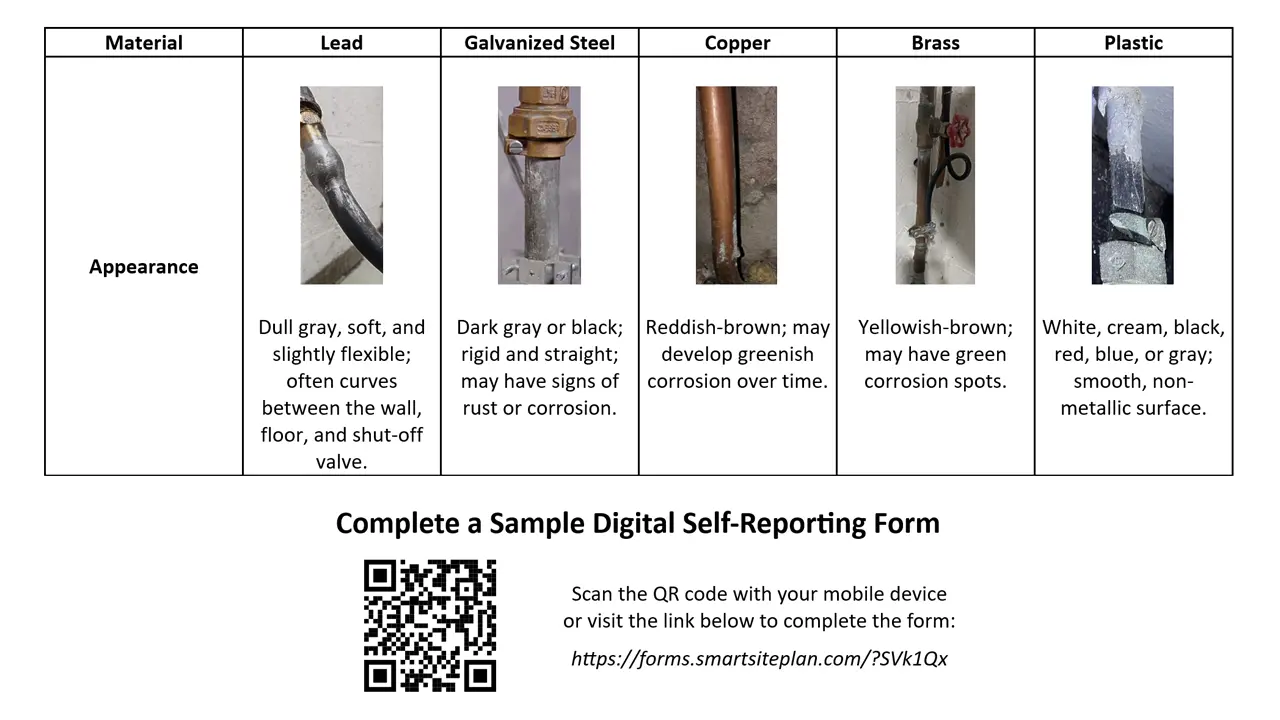
Utilize VDH ODW’s official templates, such as the Community Service Line Inventory Template and the Small NTNC Service Line Inventory Template, to classify lines as Lead, Galvanized Requiring Replacement (GRR), Unknown, or Non-Lead (October 16, 2024)
Identify and plan for first-draw sampling at Tier 1 residences, with emphasis on homes constructed before 1979–1988 (post-lead plumbing bans) or those with known or suspected lead service line components
Prepare outreach materials and notification templates provided by VDH ODW. Ensure you can issue both initial and annual consumer notifications, including Tier 1 public notifications for lead action level exceedances, starting October 16, 2024
Prepare the Baseline Inventory by November 1, 2027. This inventory builds upon the initial one, requiring the inclusion of information identified on connectors, as well as any updated or new details on service line materials and their locations
Prepare Consumer Confidence Report (CCR) updates annually by July 1. Waterworks need to notify residents and customers of the completion of the initial inventory and provide information on where the inventory can be accessed
Compile a list of all schools and licensed childcare facilities served by their system and submit it to the VDH SWIFT Portal by November 1, 2027
Waterworks with lead or GRR service lines must resume standard monitoring (semi-annual sampling for at least two monitoring periods), beginning January 2028
Water systems should confirm that existing corrosion control treatment is operating within established EPA and state-defined operational parameters by December 31, 2027. Additionally, for systems with known or suspected lead service lines, utilities must collect specialized non-compliance samples, specifically first- and fifth-liter draws
Juno Maps Solutions
Purpose-built tools to help Virginia water systems achieve and maintain Lead and Copper Rule compliance.
Custom Geospatial Software
Tailored solutions that overlay property data, infrastructure layers, and compliance requirements to accelerate inventory and replacement planning.
Paper Plans to Digital Maps
We digitize legacy records, including paper maps, as-builts, and service cards, into spatially accurate datasets you can act on.
Water Service Line Management
Manage lead and copper compliance activities with tools designed to track service line materials, categorize unknowns, and generate VDH ODW-ready reports.
Juno Maps Simplifies Compliance
Complying with the Lead and Copper Rule is complex, but it doesn't have to be overwhelming. Juno Maps simplifies the process by transforming static records and fragmented data into actionable geospatial intelligence. Our platform helps you:
- Build accurate service line inventories that meet VDH ODW and EPA reporting requirements.
- Visualize risk areas and prioritize replacements using historical data, property records, and GIS layers.
- Generate custom reports and outreach tools that streamline public communication and recordkeeping.
From corrosion control planning to inventory management and public engagement, Juno Maps empowers utilities with the clarity and control they need to stay compliant and proactive.
Learn more about our LCR services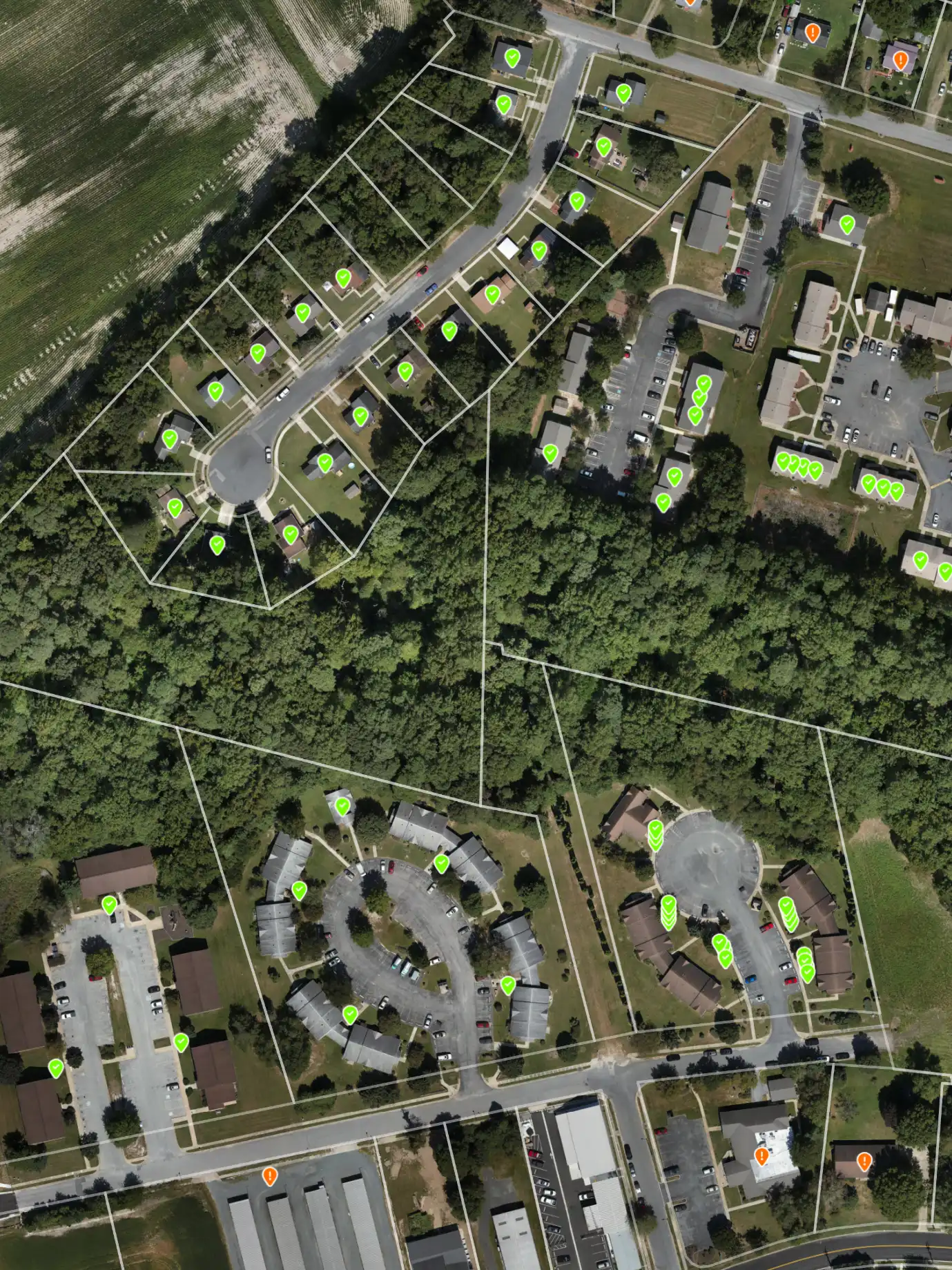
Funding Options and Opportunities
Virginia water utilities have access to a range of funding sources to support compliance with the LCRR and LCRI, particularly in addressing lead in drinking water and reducing exposure to lead in public water systems.
Drinking Water State Revolving Funds (DWSRFs)
Available for lead pipe replacement and inventory projects.
Lead Elimination Assistance Program (LEAP)
Grant funding to create and maintain lead service line replacement (LSLR) programs.
Water Infrastructure Finance and Innovation Act (WIFIA) Program
Low-cost financing for water infrastructure projects, including lead service line replacement.
Navigating these programs can be complex, but Juno Maps provides expert support to help you evaluate eligible opportunities and organize the necessary documentation.
Request InformationGet Your Questions Answered
Common questions about Virginia's Lead and Copper Rule compliance requirements.
The Lead and Copper Rule was first issued by the EPA in 1991 to curb lead and copper in drinking water by requiring utilities to control the corrosion of lead and copper plumbing materials. In 2021, the EPA released the revised Lead and Copper Rule (LCRR), followed by the draft Lead and Copper Rule Improvements (LCRI). The revisions strengthen public notification, mandate a detailed lead service line inventory, and accelerate programs that replace lead service lines, all aimed at lowering community lead exposure and protecting public health.
Under the LCR, a system is out of compliance if more than 10% of required tap water samples exceed the action level of 0.015 mg/L (15 ppb) for lead or 1.3 mg/L (1,300 ppb) for copper. Utilities must initiate public education, optimize treatment, and, if necessary, begin lead service line replacement whenever these thresholds are exceeded.
The LCRR's initial milestone is for every Community and Non-Transient Non-Community water system to prepare and submit a complete inventory of service line materials by October 16, 2024. This inventory of service line materials must classify each line as lead, galvanized requiring replacement, non-lead, or unknown, and be kept current thereafter.
Lead can enter drinking water when plumbing materials that contain lead, such as lead service lines, solder, or brass fixtures, corrode. Homes built before 1986 are more likely to have these materials, and the service line running from the water main to the building is often the most significant source of lead. Water with high acidity or low mineral content speeds up corrosion, increasing the risk of lead in tap water.
If lead concentrations exceed an action level, the utility must: Issue a Tier 1 Public Notice within 24 hours and notify the Virginia Department of Health (VDH) and the EPA. Send annual notices by December 31 to all customers with lead, GRR, or unknown service lines. Update your Consumer Confidence Report (CCR) with revised lead health language and inventory access details. Implement or verify corrosion control treatment and ensure water quality parameters are within required limits. Submit a Lead Service Line Replacement Plan by November 1, 2027, and replace lead pipes within 10 years. Resume semi-annual tap water sampling if reduced monitoring was in place, starting January 2028, for lead or GRR systems. Monitor water quality parameters during the exceedance period, including pH, alkalinity, and orthophosphate. Collect source water samples within six months from each entry point to the distribution system.
Water utilities are responsible for replacing the public portion of lead service lines, from the water main to the property boundary. Property owners typically own the private-side portion, but under the Lead and Copper Rule Revisions (LCRR) and Improvements (LCRI), utilities must offer to replace the entire line when replacing any lead service line segment. Utilities must include both public and private-side replacements in their Service Line Replacement Plan, due November 1, 2027, in Virginia. Funding is available through state and federal programs to help cover replacement costs. Ultimately, utilities are responsible for coordinating and completing full replacements to comply with federal and state regulations.
Essential Resources for Lead Service Line Compliance
Get expert guidance on EPA requirements, reporting tools, and inventory best practices to help utilities stay compliant and efficient.