Lead and Copper Rule Compliance in Maryland
Maryland water systems must meet federal and state requirements under the Lead and Copper Rule. Juno Maps simplifies compliance with geospatial tools, inventory management, and MDE-ready reporting.
Maryland Lead and Copper Rule
The Lead and Copper Rule (LCR), introduced by the U.S. Environmental Protection Agency in 1991 and adopted in Maryland that same year, sets regulatory standards to reduce lead and copper in drinking water. Unlike traditional contaminant limits, the LCR uses a treatment technique approach to minimize the corrosion of plumbing materials that may leach harmful metals into the water supply.
This rule applies to all Community Water Systems (CWS) and Non-Transient Non-Community Water Systems (NTNCWS) in Maryland.
Talk to an Expert
Maryland LCR Key Points
Essential requirements under the Lead and Copper Rule for Maryland water systems.
Action Levels (ALs)
Lead – 0.015 mg/L; Copper – 1.3 mg/L (based on 90th percentile sample values).
Treatment Focus
Prioritizes corrosion control and infrastructure replacement over source water limits.
Service Line Inventories
Water systems must identify and categorize service lines (Lead, GRR, Non-Lead, Unknown).
Public Education
Required if lead levels exceed the AL, including specific communication protocols.
Sampling Protocols
First-draw samples collected at high-risk residential taps (Tier 1).
Incremental Monitoring
Frequency adjusted based on system performance and history of AL exceedance.
Compliance Elements of the LCR in Maryland
Maryland water systems must comply with a combination of federal and state-specific requirements. The Maryland Department of the Environment (MDE) provides detailed reporting forms and technical guidance for utilities across the state.
Sampling & Monitoring
- First-draw samples from Tier 1 residential sites
- Monitoring frequency (semiannual, annual, or triennial) based on system size and results
- Water Quality Parameter (WQP) monitoring required if AL is exceeded
Service Line Inventories
- Complete initial inventory by October 16, 2024
- Categorize all service lines: Lead, GRR, Non-lead, or Unknown
- Update inventories annually and make them publicly accessible
Action After AL Exceedance
- Optimize corrosion control treatment
- Launch lead service line replacement programs if needed
- Provide public education within 60 days of the monitoring period
Customer Notification
- Notify all customers of their individual lead sample results within 30 days, regardless of outcome
Important Dates
Key milestones for Lead and Copper Rule compliance in Maryland.
LCR published by the EPA, with Maryland adopting it in the early 1990s.
Corrosion control treatment required for systems serving over 50,000 people.
Individual lead test result notification became mandatory in Maryland.
Deadline to submit initial service line inventory to MDE.
Lead and Copper Rule Improvements (LCRI) published in the Federal Register.
Compliance deadline for LCRI, including a baseline service line inventory.
Preparing for Compliance
Utilities should take proactive steps now to meet current and upcoming regulatory obligations under the LCR and LCRI.
Recommended Activities
- Conduct a full materials inventory using MDE-provided templates
- Identify and prioritize high-risk Tier 1 sampling sites, focusing on homes built before 1972 for lead pipes and before 1986 for lead solder
- Launch public education programs and update communication protocols
- Develop a lead service line replacement strategy targeting 7% annual replacement if needed
- Integrate historical records, maintenance data, and GIS data for comprehensive tracking
Juno Maps Solutions
Purpose-built tools to help Maryland water utilities achieve Lead and Copper Rule compliance.
Custom Geospatial Software
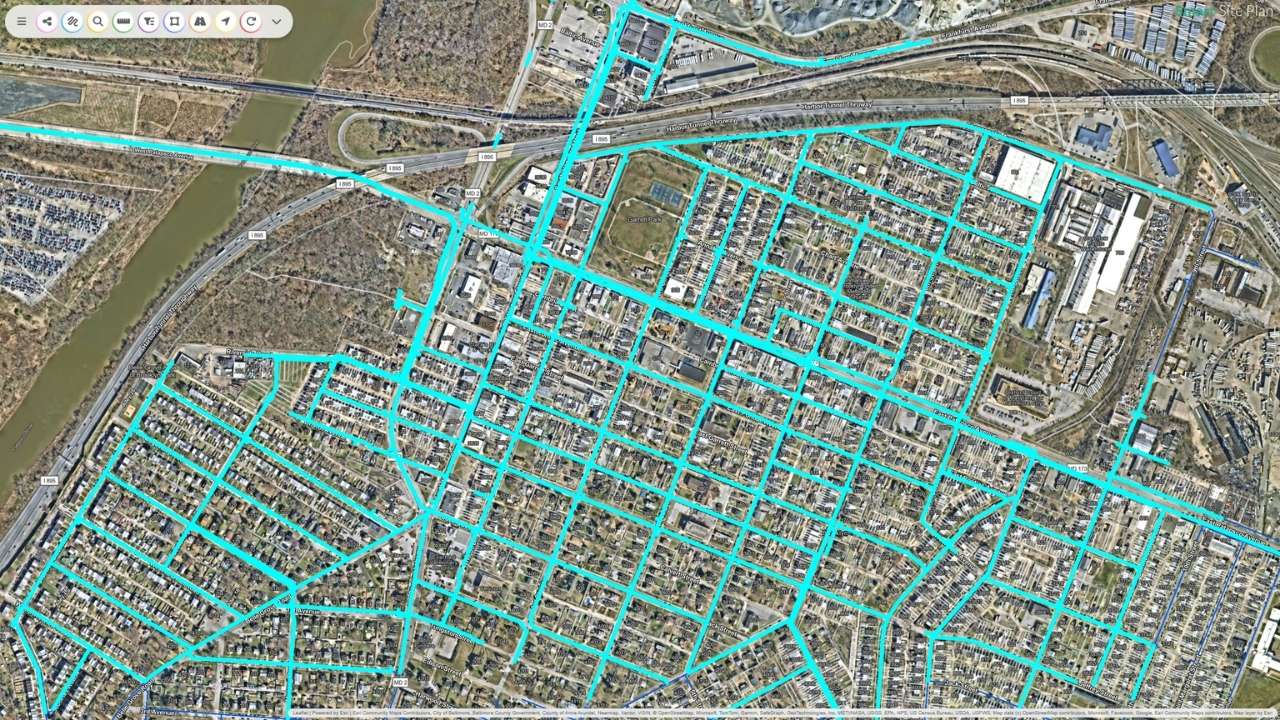
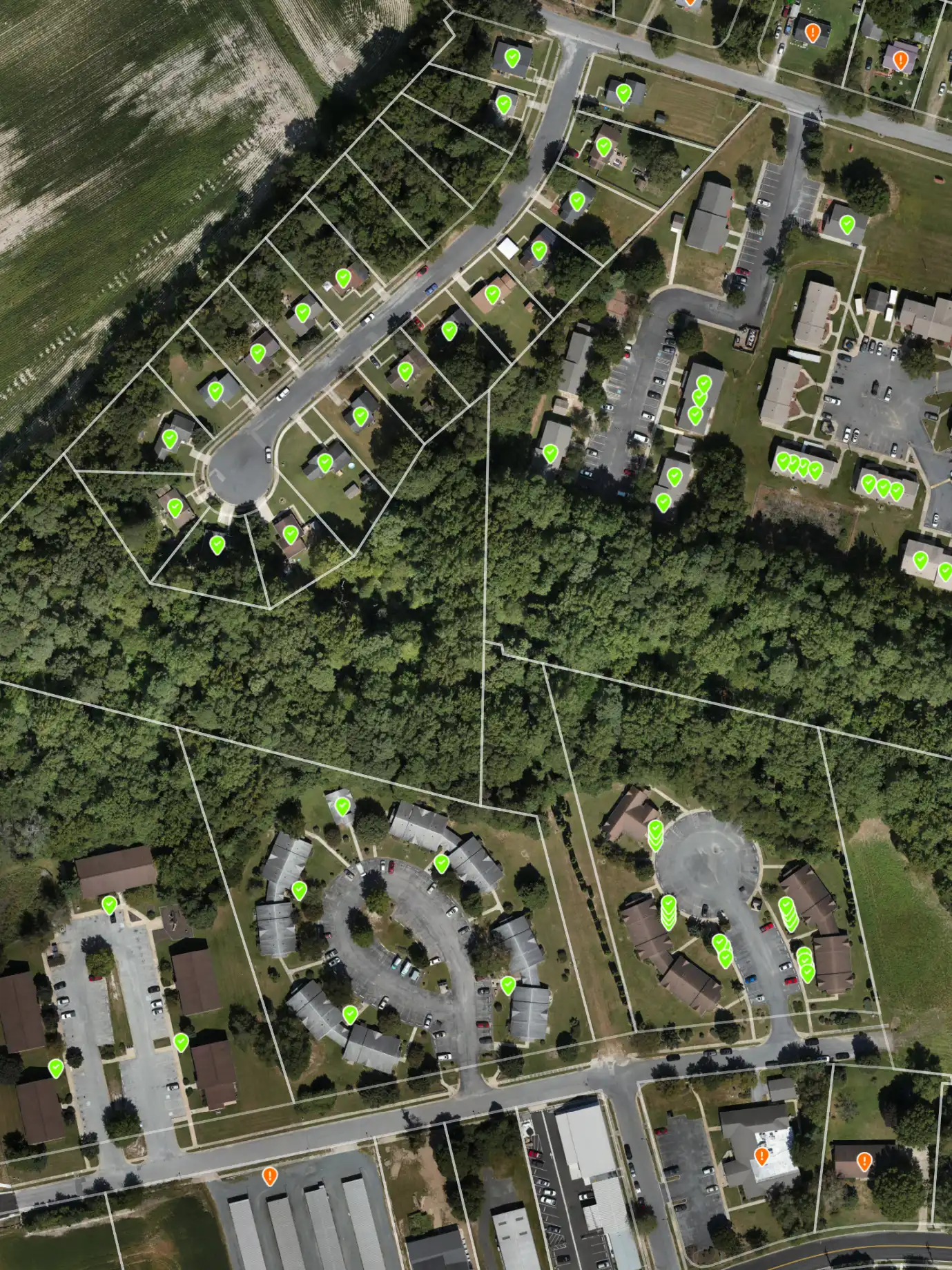
Tailored solutions that overlay property data, infrastructure layers, and compliance requirements to accelerate inventory and replacement planning.
Paper Plans to Digital Maps
We digitize legacy records, including paper maps, as-builts, and service cards, into spatially accurate datasets you can act on.
Water Service Line Management
Manage lead and copper compliance activities with tools designed to track service line materials, categorize unknowns, and generate MDE-ready reports.
Juno Maps Simplifies Compliance
Complying with the Lead and Copper Rule is complex, but it doesn't have to be overwhelming. Juno Maps simplifies the process by transforming static records and fragmented data into actionable geospatial intelligence.
Our platform helps you:
From corrosion control planning to inventory management and public engagement, Juno Maps empowers utilities with the clarity and control they need to stay compliant and proactive.
Funding Options and Opportunities
Maryland utilities have access to multiple funding opportunities to support lead service line replacement and compliance activities.
Maryland Water Infrastructure Financing Administration (WIFA)
Provides low-interest loans and grants for lead service line replacement projects.
EPA Environmental Finance Centers
Including the University of Maryland EFC, offering financial and planning assistance to water systems.
Maryland Rural Water Association
Offers training, outreach, and on-the-ground support for small systems.
Frequently Asked Questions
Common questions about the Lead and Copper Rule in Maryland.
The Lead and Copper Rule requires water systems to monitor drinking water at customer taps for lead and copper. If lead concentrations exceed the action level of 0.015 mg/L or copper exceeds 1.3 mg/L at the 90th percentile, systems must take corrective actions including optimizing corrosion control treatment, conducting public education, completing service line inventories, and initiating lead service line replacement programs.
Lead pipes were banned in Maryland on May 17, 1972, under Maryland law (COMAR 09.20.11.10A). Lead solder and fittings were permitted in plumbing systems until June 19, 1986, when federal law prohibited their use in public water systems.
The action level for lead is 0.015 mg/L (15 parts per billion) and for copper is 1.3 mg/L. These levels are measured at the 90th percentile of tap water samples collected from high-risk residential sites. If a system exceeds these levels, it must implement corrective actions as required by the Lead and Copper Rule.
If a water system exceeds the lead action level, it must optimize corrosion control treatment, initiate a lead service line replacement program targeting 7% annual replacement of known lead lines, provide public education within 60 days of the end of the monitoring period, and deliver Tier 1 public notification to affected customers.
Responsibility for replacing lead service lines is shared between the water utility and the property owner. The utility is typically responsible for the portion of the service line from the water main to the curb stop or property line, while the property owner is responsible for the portion from the property line to the building. Many programs and funding sources are available to help cover costs on both sides.
Related Resources
Learn more about lead service line compliance and the tools available to help your water system.