Delaware Lead and Copper Guide
Navigate Delaware\u2019s Lead and Copper Rule requirements with confidence. From service line inventories to replacement planning, Juno Maps helps Delaware water systems achieve full compliance with ODW and EPA deadlines.
Delaware Lead and Copper Rule for Drinking Water
The Lead and Copper Rule (LCR), originally published by the U.S. Environmental Protection Agency (EPA) in 1991, is a treatment technique regulation under the Safe Drinking Water Act. Instead of setting a single maximum contaminant level, the rule requires systems to monitor drinking water at customer taps, control corrosion in pipes, and reduce exposure to lead and copper from plumbing materials.
In Delaware, this regulation is implemented by the Office of Drinking Water (ODW) within the Division of Public Health, in coordination with the Delaware Department of Natural Resources and Environmental Control (DNREC). The rule applies to all Community Water Systems (CWS) and Non-Transient Non-Community (NTNC) systems statewide.
Request Information
Delaware LCR Key Points
Essential requirements every Delaware water system must understand under the Lead and Copper Rule.
Action Levels (ALs)
Lead – 15 ppb (0.015 mg/L); Copper – 1.3 ppm (1.3 mg/L) at the 90th percentile of tap samples.
Treatment Technique
Delaware systems must maintain optimal corrosion control treatment (OCCT) to reduce corrosion and prevent metals from leaching.
Service Line Inventory (SLI)
By October 16, 2024, all public water systems must submit a service line inventory through the ODW/120Water portal, classifying each water service line as Lead, GRR, Non-Lead, or Unknown, and keep it up to date.
Lead Service Line Replacement (LSLR)
If lead levels exceed 15 ppb, utilities must begin lead service line replacement, prioritizing homes with known or suspected lead service lines.
School and Child Care Testing
The 2021 LCRR requires testing drinking water at schools and licensed child care facilities to better protect children from lead exposure.
Enhanced Sampling (LCRI)
Starting 2027–2028, systems will perform first- and fifth-liter sampling at homes with lead or galvanized requiring replacement lines to pinpoint contamination between the water meter and customer tap.
Compliance Elements in Delaware
All community water systems (CWS) and non-transient non-community (NTNC) systems must meet EPA Lead and Copper Rule (LCR) requirements as implemented by Delaware’s Office of Drinking Water (ODW).
Sampling and Monitoring
- First-draw one-liter samples must be taken from Tier 1 sites (homes with lead plumbing, lead solder, or lead service lines).
- If a system exceeds an action level, it must perform water quality parameter (WQP) monitoring and confirm optimal corrosion control treatment (OCCT) status.
- Notice of lead tap monitoring results must be provided to customers within 30 days.
- Starting with LCRI compliance (Nov 1, 2027) and into 2028, systems with lead service lines (LSLs) or GRR must collect paired first- and fifth-liter samples at those sites.
Service Line Inventory (SLI) & Replacement
- Service line inventories are required by October 16, 2024, using the Delaware SLI Excel template and 120Water platform.
- Each line must be classified as Lead, GRR, Non-Lead, or Unknown.
- Water utilities must plan to replace lead service lines and lead connectors where lead concentrations exceed an action level.
- “Unknown” materials must be treated as lead until confirmed otherwise.
Public Education & Reporting
- If lead levels exceed 15 ppb, public water systems must distribute public education materials, including a summary of the rule requirements and steps to reduce exposure to lead in drinking water.
- Consumer Confidence Reports (CCRs) and annual notifications must include updates on lead service line replacement progress and sample results.
- Reports are submitted to the ODW and EPA and must include tap water monitoring results, corrosion control updates, and inventory changes.
Schools & Child Care
- Delaware systems must support school/child-care sampling per LCRR/LCRI (e.g., testing coverage and outreach). Delaware also operates a state school program; note that the state has used more protective levels in that program’s communications.
Important Dates
Key milestones in the development and implementation of the Lead and Copper Rule in Delaware.
EPA published a regulation to control lead and copper in drinking water.
EPA revised the Lead and Copper Rule (LCRR), requiring service line inventories and school/child care testing.
The Delaware Office of Drinking Water (ODW) launched its Service Line Inventory submission process via the 120Water platform, providing templates and guidance to all public water systems.
Deadline for all Delaware public water systems to submit their Service Line Inventory (SLI) to ODW through the 120Water portal, as required under the LCRR.
EPA published the final Lead and Copper Rule Improvements (LCRI) to accelerate full lead service line replacement.
National LCRI compliance deadline for updated sampling and replacement programs.
Preparing for Compliance
To stay ahead of upcoming Lead and Copper Rule (LCR) and Lead and Copper Rule Improvements (LCRI) requirements, Delaware water utilities and public water systems should begin implementing compliance steps now.
Recommended Activities
Use the official ODW/120Water template to identify and classify each service line as Lead, Galvanized Requiring Replacement (GRR), Non-Lead, or Unknown. Update the inventory as materials are verified and ensure public access once submitted.
Identify Tier 1 sampling sites, including homes with lead plumbing or lead service lines, and schools and licensed child care facilities. This plan should also anticipate first- and fifth-liter sampling under the upcoming LCRI (2027–2028).
Review your designation of optimal corrosion control treatment (OCCT) and evaluate water quality parameters (WQPs) such as pH, alkalinity, and inhibitor dose. Adjust treatment as needed to minimize corrosion and maintain compliance.
Develop and test templates for consumer notifications, lead tap results, and Consumer Confidence Report (CCR) content. CCRs, due annually by July 1, must include updates on service line inventories, replacement progress, and lead sampling results.
After submitting your inventory, ensure annual notifications are provided to any customers with lead, GRR, or unknown service lines, as required by the EPA’s LCRR/LCRI transparency provisions.
The Delaware Rural Water Association (DRWA) offers training, webinars, and technical assistance tailored for small water systems, including help with sampling protocols, inventory uploads, and corrosion control verification.
Participate in ODW and 120Water webinars and LCRI planning assistance sessions. These sessions provide guidance on 2027–2028 compliance requirements, including paired sampling procedures, replacement scheduling, and public outreach expectations.
Juno Maps Solutions
Purpose-built tools to help Delaware water utilities achieve and maintain LCR compliance.
Custom Geospatial Software
Tailored solutions that overlay property data, infrastructure layers, and compliance requirements to accelerate inventory and replacement planning.
Paper Plans to Digital Maps
We digitize legacy records, including paper maps, as-builts, and service cards, into spatially accurate datasets you can act on.
Water Service Line Management
Manage lead and copper compliance activities with tools designed to track service line materials, categorize unknowns, and generate ODW-ready reports.
Juno Maps Simplifies Compliance
Complying with the Lead and Copper Rule is complex, but it doesn't have to be overwhelming. Juno Maps simplifies the process by transforming static records and fragmented data into actionable geospatial intelligence. Our platform helps you:
- Build accurate service line inventories that meet ODW and EPA reporting requirements.
- Visualize risk areas and prioritize replacements using historical data, property records, and GIS layers.
- Generate custom reports and outreach tools that streamline public communication and recordkeeping.
From corrosion control planning to inventory management and public engagement, Juno Maps empowers utilities with the clarity and control they need to stay compliant and proactive.
Learn More About Our LCR Services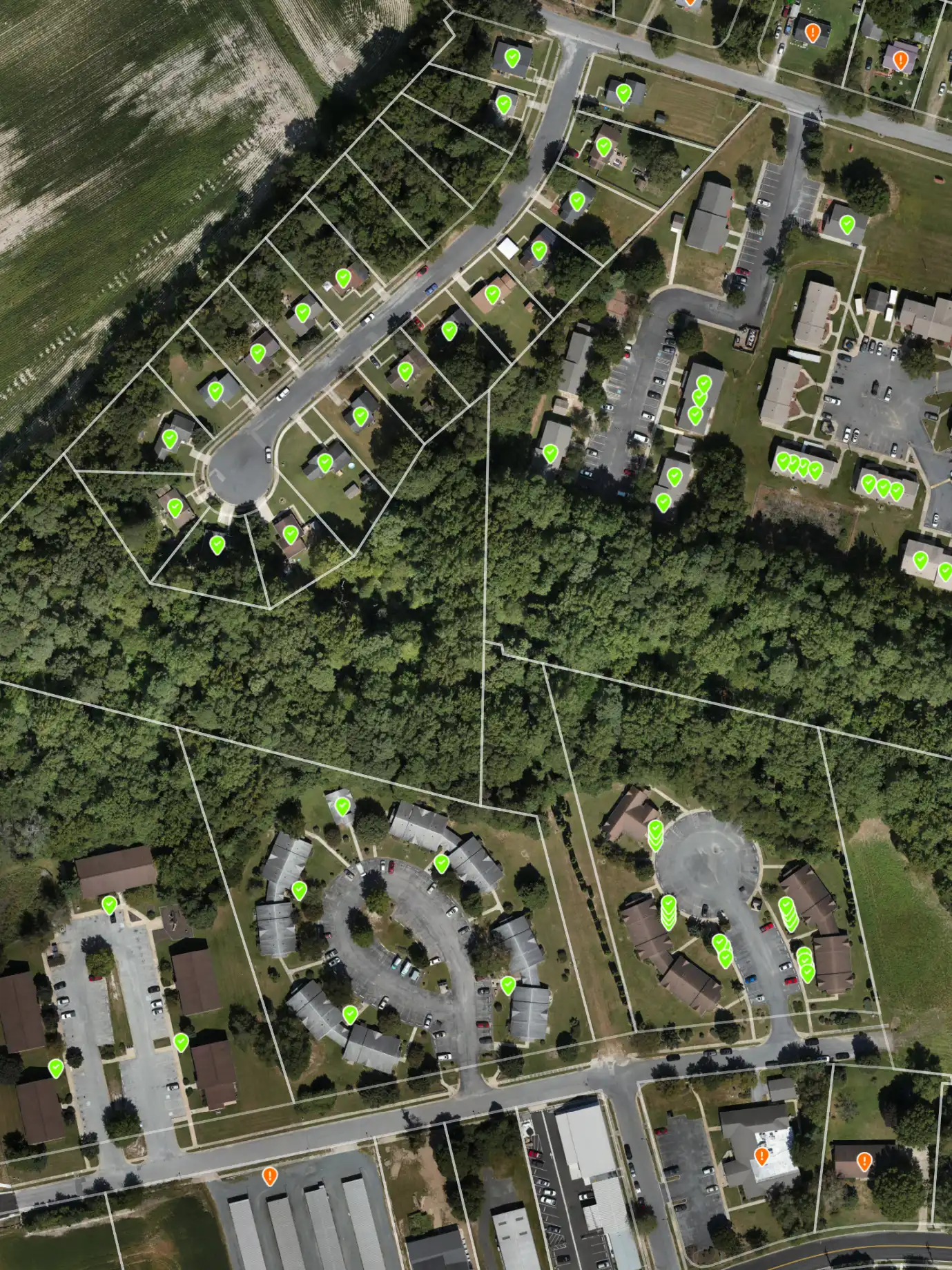
Funding Options and Opportunities
Delaware water systems have access to several funding programs to support lead and copper rule compliance and reduce lead exposure.
Delaware Drinking Water State Revolving Fund (DWSRF)
Managed jointly by DNREC and the Office of Drinking Water, this fund offers low-interest loans and grants for lead service line replacement projects and corrosion control improvements.
Bipartisan Infrastructure Law (BIL)
Allocates funding specifically for lead service line inventories and replacements.
EPA WIFIA Program
Offers low-cost, long-term financing for large-scale drinking water infrastructure projects.
Delaware Rural Water Association (DRWA)
Provides technical training, grant guidance, and webinar resources for small and rural systems.
Navigating these programs can be complex, but Juno Maps provides expert support to help you evaluate eligible opportunities and organize the necessary documentation.
Get Your Questions Answered
Common questions about Lead and Copper Rule compliance for Delaware water systems.
The Lead and Copper Rule (LCR) is an EPA regulation designed to reduce lead and copper in drinking water, primarily by controlling corrosion in plumbing materials. The rule requires systems to monitor drinking water at customer taps and take action when concentrations exceed an action level of 15 ppb for lead or 1.3 ppm for copper.
The Lead and Copper Rule Revisions (LCRR), finalized in January 2021, require utilities to develop service line inventories, monitor lead concentrations at customer taps, and increase public education when action levels are exceeded. These updates aim to reduce the risks of lead exposure from lead pipes and plumbing materials.
In the State of Delaware, the Office of Drinking Water (ODW) under the Department of Health and Social Services (DHSS) enforces EPA’s Lead and Copper Rule requirements, supported by DNREC and Delaware Rural Water Association for funding and technical assistance.
A service line inventory tracks the material of each water service line, from the water main to the meter and into homes. Delaware utilities must use the ODW/120Water template to classify each line as Lead, GRR, Non-Lead, or Unknown, then submit through 120Water by October 16, 2024.
Instead of a maximum contaminant limit, the Lead and Copper Rule is based on a treatment technique that requires water systems to control corrosion in their distribution systems. The technique for the rule requires utilities to maintain optimal corrosion control treatment (OCCT), adjusting pH, alkalinity, and inhibitor dosage, to prevent lead and copper from leaching out of pipes and plumbing materials.
Issue a Tier 1 Public Notice within 24 hours and notify the state and the EPA. Send annual notices by December 31 to all customers with lead, GRR, or unknown service lines. Update your Consumer Confidence Report (CCR) with revised lead health language and inventory access details. Implement or verify corrosion control treatment and ensure water quality parameters are within required limits. Submit a Lead Service Line Replacement Plan by November 1, 2027, and replace lead pipes within 10 years. Resume semi-annual tap water sampling if reduced monitoring was in place, starting January 2028, for lead or GRR systems. Monitor water quality parameters during the exceedance period, including pH, alkalinity, and orthophosphate. Collect source water samples within six months from each entry point to the distribution system.
In Delaware, replacement responsibility is shared. The public water system replaces the portion from the water main to the meter, while the property owner replaces the section on private property. Both are encouraged to coordinate for full replacement, since partial replacements can increase lead levels in tap water.
Essential Resources for Lead Service Line Compliance
Get expert guidance on EPA requirements, reporting tools, and inventory best practices to help utilities stay compliant and efficient.